

Leg weakness may occur for a variety of reasons, such as temporary fatigue and inactivity, nutritional deficiencies, the side effects of medication, nerve disorders, poor circulation, or existing medical conditions. Among older adults, changes in muscle strength and balance also make it more difficult to stand, walk, climb stairs, and carry out ordinary activities.
When your legs suddenly become weak or unsteady, it is important to remember when the weakness began and to consider whether or not there are any other symptoms. If the weakness is sudden and affects one side of the body, in particular if it is accompanied by facial drooping, difficulty in speaking, severe dizziness, or confusion, then you should seek immediate medical help.
You must also talk to a healthcare professional about any gradual or repeated weakness. It is important to find the cause since the appropriate treatment for weak legs will depend on the reason that is causing the problem.
We will look below at the common causes of leg weakness, explain why it may become more apparent as people get older, list the warning signs to be aware of, and provide some practical methods by which older adults can help to maintain their strength, balance, and mobility.

Care Assessment
What Does It Feel Like to Have Weakness in the Legs?
The degree of leg weakness can vary from person to person; some people notice a real loss of strength whereas others say their legs feel heavy, shaky, wobbly, tired, or ‘like jelly’.
Common signs may include:
- Difficulty getting up from a chair
- Trouble climbing stairs
- Legs that feel weak when standing
- Feeling unsteady while walking
- Needing to hold furniture or another person for support
- The legs get tired after walking over a short distance.
- Difficulty lifting the feet or legs
- A feeling that the knees or legs may give out
- Reduced confidence while walking
- Changes in balance
Sometimes weakness develops gradually. In other cases, it appears suddenly.
That difference matters.
Sudden weakness can require urgent medical attention, while gradual weakness may be associated with changes in activity level, muscle mass, nutrition, medications, or an underlying medical condition.
What Causes Weakness in the Legs?
There is no single cause of weak legs. Muscle, nerve, circulation, nutritional, medication-related, and neurological issues can all affect lower-body strength.
For older adults, several factors may occur at the same time.
Here are some common possibilities.
1. Loss of Muscle Strength
Muscle mass and strength can gradually decrease with age, particularly when someone becomes less physically active.
Long periods of sitting, illness, hospitalization, or reduced activity can accelerate this loss. As the muscles in the hips, thighs, and lower legs weaken, activities such as standing from a chair or climbing stairs may become more difficult.
Age-related loss of muscle mass and function is sometimes called sarcopenia.
Staying physically active and performing appropriate strength-building activities can help older adults maintain muscle function.
2. Physical Inactivity
The less muscles are used, the weaker they can become.
An older adult who stops walking regularly because of illness, pain, fear of falling, or another health concern may gradually lose strength.
This can sometimes create a cycle:
Less activity leads to weaker muscles. Weaker muscles move harder. Movement then becomes less frequent, which can contribute to additional weakness.
A healthcare provider or physical therapist can help determine what type and amount of activity may be appropriate.
3. Vitamin and Nutritional Deficiencies
Nutrition plays an important role in muscle and nerve function.
Deficiencies involving nutrients such as vitamin B12, vitamin D, iron, or other essential nutrients may contribute to fatigue, weakness, neurological symptoms, or reduced physical function in some people.
Protein intake is also important for maintaining muscle mass, particularly as we age.
However, weakness should not automatically be treated with vitamins or supplements.
A healthcare professional can determine whether a nutritional deficiency is actually present through medical evaluation and, when appropriate, laboratory testing.
4. Medication Side Effects
Certain medications can contribute to weakness, dizziness, fatigue, changes in blood pressure, or balance problems.
Older adults may be particularly affected when they take several medications.
Never stop taking a prescribed medication because you suspect it is causing leg weakness. Instead, discuss the symptoms with a healthcare provider or pharmacist. They can review medications, doses, interactions, and possible side effects.
5. Nerve Problems and Peripheral Neuropathy
Peripheral neuropathy occurs when nerves outside the brain and spinal cord become damaged.
Symptoms can include:
- Numbness
- Tingling
- Burning sensations
- Pain
- Changes in sensation
- Muscle weakness
- Balance difficulties
Diabetes is one possible cause of peripheral neuropathy, but it is not the only one.
Vitamin deficiencies, certain medications, injuries, infections, autoimmune conditions, and other medical problems may also affect peripheral nerves.
If you experience persistent numbness, tingling, burning, or weakness, discuss these symptoms with a healthcare professional.
6. Sciatica and Other Spine-Related Problems
Problems affecting nerves in the lower back can sometimes cause symptoms that travel into the legs.
Sciatica, for example, occurs when the sciatic nerve becomes irritated or compressed. Symptoms can include pain, tingling, numbness, or weakness that travels from the lower back or buttock into the leg.
Other spinal conditions may also affect mobility or leg strength.
Weakness associated with severe back pain, numbness around the groin area, or loss of bladder or bowel control requires urgent medical evaluation.
7. Circulation Problems
Healthy circulation helps deliver oxygen and nutrients to the muscles.
Certain vascular conditions can reduce blood flow to the legs and contribute to symptoms during activity. Depending on the cause, a person may experience discomfort, cramping, heaviness, fatigue, or weakness, particularly while walking.
Because nerve and circulation problems can sometimes produce similar symptoms, medical evaluation is important rather than trying to diagnose the cause based on symptoms alone.
8. Joint Pain and Arthritis
Sometimes a person describes their legs as “weak” when pain is actually making movement difficult.
Arthritis affecting the hips, knees, ankles, or spine can change how someone walks and may reduce activity.
Over time, reduced activity can also contribute to muscle weakness.
Managing joint pain and maintaining appropriate movement may therefore be an important part of protecting mobility.
9. Dehydration and Electrolyte Problems
Fluids and electrolytes help support normal muscle and nerve function.
Dehydration can sometimes contribute to fatigue, dizziness, muscle cramps, or weakness. Older adults may be at higher risk of dehydration for several reasons, including reduced thirst sensation, illness, certain medications, and difficulty accessing fluids independently.
Significant electrolyte imbalances can also affect muscle function and require medical evaluation.
10. Neurological Conditions
Some neurological conditions can cause weakness, balance problems, coordination changes, or difficulty walking.
A healthcare professional should evaluate these symptoms, especially if weakness is progressive, unexplained, affects one side more than the other, or occurs with other neurological changes.
Why Do My Legs Feel Weak and Shaky All of a Sudden?
Sudden weakness or shakiness deserves more attention than gradual fatigue after activity.
Possible explanations range from relatively temporary issues, such as dehydration or low blood sugar, to more serious medical problems.
What matters most is the combination of symptoms.
Call 911 or seek emergency medical care when sudden leg weakness occurs with symptoms such as:
- Weakness or numbness on one side of the body
- Facial drooping
- Difficulty speaking or understanding speech
- Sudden severe dizziness
- Sudden difficulty walking
- Loss of coordination
- Severe headache
- Fainting or loss of consciousness
- Chest pain or severe shortness of breath
Do not treat these symptoms at home while waiting to see whether they improve.
Why Do My Legs Feel Weak When I Stand Up?
- If your legs feel weak specifically when you stand, several factors may be involved.
- One possibility is simply reduced lower-body strength. Standing from a seated position requires considerable involvement from the thighs, hips, and core.
- Another possibility is a change in blood pressure when moving from sitting or lying down to standing. This can cause dizziness, lightheadedness, or unsteadiness.
- Medication effects, dehydration, balance problems, joint pain, and neurological conditions can also contribute.
- If standing regularly causes weakness, dizziness, or a feeling that you may fall, discuss the symptoms with a healthcare provider.
Why Do My Legs Feel Weak When Walking?
Leg weakness while walking may be associated with muscle fatigue, reduced conditioning, joint problems, nerve problems, circulation issues, or other medical conditions.
Pay attention to patterns.
For example:
- Does the weakness begin immediately or only after walking for several minutes?
- Does resting improve it?
- Is there pain, cramping, numbness, or tingling?
- Does one leg feel weaker than the other?
- Have you started walking more slowly or holding onto objects for support?
- These details can help a healthcare professional investigate the underlying cause.
What Deficiency Causes Weakness in the Legs?
People often search for a single vitamin responsible for weak legs, but no single deficiency explains the symptom.
Vitamin B12 deficiency can affect the nervous system and may contribute to weakness, numbness, tingling, or balance problems. Vitamin D deficiency may also affect muscle and bone health.
Iron deficiency and inadequate overall nutrition can contribute to fatigue and reduced physical capacity.
Older adults also need adequate protein to help maintain muscle mass.
However, taking supplements without knowing whether a deficiency exists is not necessarily helpful and can sometimes cause problems.
If weakness persists, a healthcare provider can determine whether blood tests or a nutritional evaluation are appropriate.
Weak Legs in Older Adults: Why Strength and Balance Matter
Leg strength becomes especially important as we age because lower-body muscles help us do many everyday activities.
Strong legs help with:
- Standing from a chair
- Walking
- Using stairs
- Getting in and out of bed
- Maintaining balance
- Recovering from a stumble
- Performing daily activities more independently
Current physical activity guidance from the Centers for Disease Control and Prevention recommends that adults age 65 and older combine aerobic activity, muscle-strengthening activities, and balance-improving activities.
Muscle-strengthening activities are recommended on at least two days each week, depending on the person’s abilities and health.
The goal is not simply to “exercise more.” The appropriate activities should reflect a person’s current mobility, medical conditions, fall risk, and healthcare recommendations.
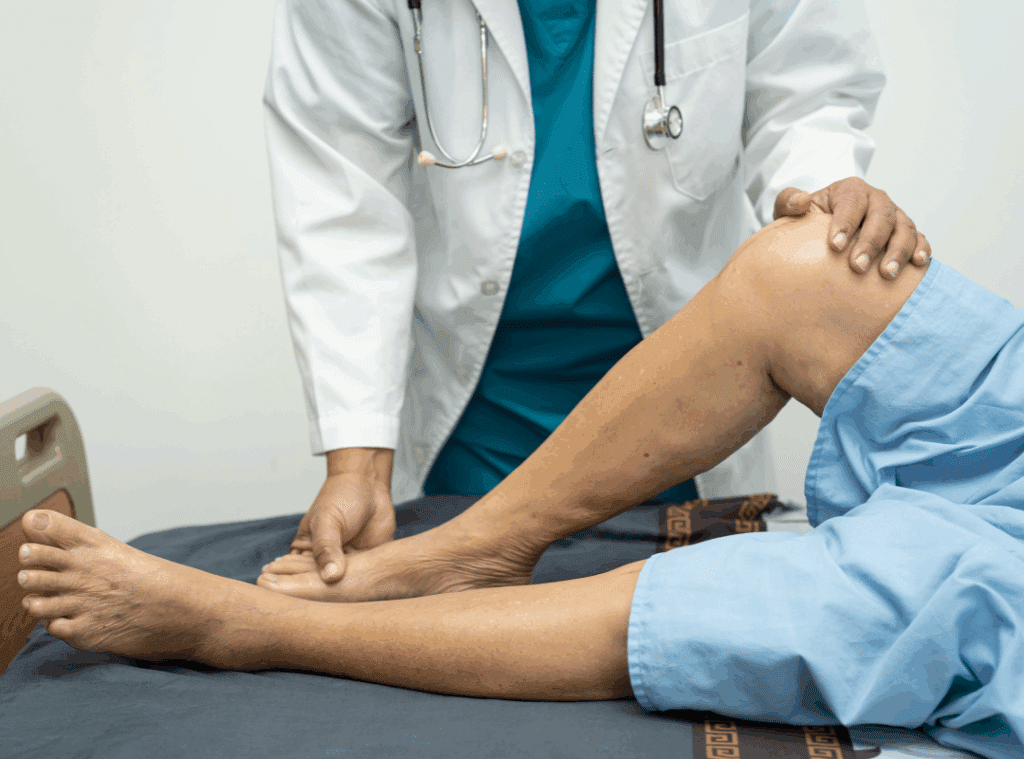
Leg Strength, Balance, and Fall Prevention After 65
Lower-body strength has become an increasingly important part of conversations about healthy aging because strength and balance are closely connected to mobility and fall prevention.
According to the CDC, more than one in four adults age 65 and older reports falling each year.
Falls can have serious consequences for older adults, including injuries, hospitalization, reduced confidence, and loss of independence.
Improving leg strength alone cannot prevent every fall. Vision, medications, footwear, environmental hazards, medical conditions, and balance can all contribute to fall risk.
However, the CDC includes exercises that improve leg strength and balance among its fall-prevention recommendations for older adults.
This makes maintaining lower-body function an important part of a broader healthy-aging strategy.
How to Strengthen Weak Legs in Seniors
The appropriate exercises depend on the cause and severity of the weakness.
An older adult experiencing unexplained, sudden, or significant weakness should first speak with a healthcare professional.
When exercise is appropriate, a healthcare provider or physical therapist may recommend activities such as:
Sit-to-Stand Exercises
Standing from a sturdy chair and sitting back down uses several major lower-body muscle groups.
Some older adults may initially need arm support or supervision.
Walking
Regular walking can help maintain mobility and endurance when it is safe for the individual.
Distance and intensity should match the person’s abilities.
Heel Raises
Supported heel raises can help strengthen muscles in the lower legs.
When recommended, they may be performed while holding a stable surface.
Resistance Exercises
Resistance bands or appropriately selected weights can help strengthen muscles when used correctly.
Balance Exercises
Balance activities may help older adults improve stability and confidence.
The CDC also identifies activities such as tai chi as examples that can help improve balance.
Anyone with a history of falls or significant balance problems should get professional guidance before attempting challenging balance exercises on their own.
What Is the Treatment for Weak Legs in Older Adults?
There is no single treatment because leg weakness is a symptom, not a specific disease.
Treatment depends on the underlying cause.
A healthcare professional may recommend:
- Physical therapy
- Appropriate strength and balance exercises
- Medication review
- Treatment of an underlying medical condition
- Nutritional evaluation
- Treatment of vitamin deficiencies when confirmed
- Mobility aids when appropriate
- Fall-prevention strategies
- Changes to the home environment
- Additional assistance with daily activities
For some older adults, the biggest improvement comes from addressing several small risk factors rather than finding one single cause.
Can Physical Therapy Help Weak Legs?
Physical therapy may help some people improve strength, mobility, balance, and confidence.
A physical therapist can assess how someone walks, stands, transfers, and performs everyday movements. They can then create an individualized program based on the person’s abilities and medical needs.
This is particularly valuable for older adults recovering from hospitalization, surgery, illness, injury, or a period of inactivity.
Foods That Support Muscle Health in Older Adults
Good nutrition supports healthy muscles, but no single food will cure weak legs.
Older adults generally benefit from a balanced diet that provides adequate protein, vitamins, minerals, calories, and fluids.
Protein-rich foods may include:
- Fish
- Poultry
- Eggs
- Beans and lentils
- Yogurt and other dairy foods
- Tofu and other soy foods
- Nuts and seeds
Individual nutritional needs can differ, especially for people with kidney disease, diabetes, swallowing difficulties, digestive conditions, or other medical concerns.
A physician or registered dietitian can provide personalized recommendations.
Don’t Assume Weak Legs Are Just a Normal Part of Aging
Some changes in muscle mass and strength can occur as people get older, but significant weakness should not automatically be dismissed as “just aging.”
Pay attention when an older adult begins:
- Avoiding activities they previously enjoyed
- Struggling to stand from a chair
- Holding onto walls or furniture
- Falling or nearly falling
- Walking significantly more slowly
- Having difficulty bathing or dressing
- Avoiding stairs
- Becoming afraid to walk alone
These changes may indicate that it is time to speak with a healthcare provider and evaluate the person’s overall mobility and support needs.
When to Seek Medical Attention for Leg Weakness
Contact a healthcare professional when weakness:
- Persists or becomes progressively worse
- Interferes with walking or daily activities
- Causes repeated falls or near-falls
- Is accompanied by numbness or tingling
- Affects one leg more than the other
- Appears after starting or changing medication
- Occurs with unexplained weight loss or significant fatigue
- Develops alongside persistent back pain
Seek emergency medical attention for sudden weakness accompanied by signs of stroke or another medical emergency.
Supporting Mobility and Independence at Lavender Springs
Changes in strength and mobility can affect more than walking. They can influence confidence, social participation, nutrition, personal care, and the ability to complete everyday activities safely.
For families, noticing these changes early can create an opportunity to discuss what type of support may help an older loved one continue living an active and meaningful life.
At Lavender Springs, our approach to senior living recognizes that every resident has different abilities, routines, and support needs. Families exploring senior living can learn more about our community, available care, and how we support residents with everyday life.
Schedule a tour of Lavender Springs to meet our team, explore the community, and discuss what your loved one may need.
Schedule a Tour
Frequently Asked Questions About Weakness in the Legs
Why do my legs feel weak and shaky all of a sudden?
Sudden weak or shaky legs can have many possible causes, including dehydration, changes in blood sugar or blood pressure, medication effects, or neurological and other medical conditions. Sudden weakness, especially on one side or with facial drooping or difficulty speaking, requires emergency medical attention.
What causes weak legs in older adults?
Possible causes include muscle weakness, inactivity, nutritional deficiencies, medication effects, arthritis, nerve problems, circulation problems, dehydration, and neurological conditions. Because there are many possibilities, a healthcare professional should evaluate persistent weakness.
What deficiency can cause weakness in the legs?
Vitamin B12, vitamin D, iron, and other nutritional deficiencies may contribute to weakness or related symptoms in some people. A healthcare professional can determine whether testing is appropriate rather than assuming a particular supplement is needed.
Can dehydration cause weak legs?
Dehydration can contribute to fatigue, dizziness, muscle cramps, and weakness. Older adults can be particularly vulnerable to dehydration. Still, significant or persistent weakness should be medically evaluated.
Why do my legs feel like jelly?
People sometimes use “jelly legs” to describe shakiness, fatigue, instability, or weakness. The sensation can have several causes, so discuss recurring episodes with a healthcare provider.
What helps strengthen weak legs in seniors?
When medically appropriate, activities such as walking, sit-to-stand exercises, resistance training, heel raises, and balance exercises may help maintain or improve lower-body strength. The safest program depends on the individual’s health and mobility.
Is walking good for weak legs?
Walking can help maintain mobility and endurance for many older adults, but it may not be appropriate for every cause of leg weakness. If you have significant, unexplained, or sudden weakness, get medical guidance first.
When should I worry about weakness in my legs?
Seek medical evaluation if weakness is persistent, worsening, interfering with walking, causing falls, or accompanied by pain, numbness, or other neurological symptoms. Sudden one-sided weakness, facial drooping, or difficulty speaking requires emergency medical attention.