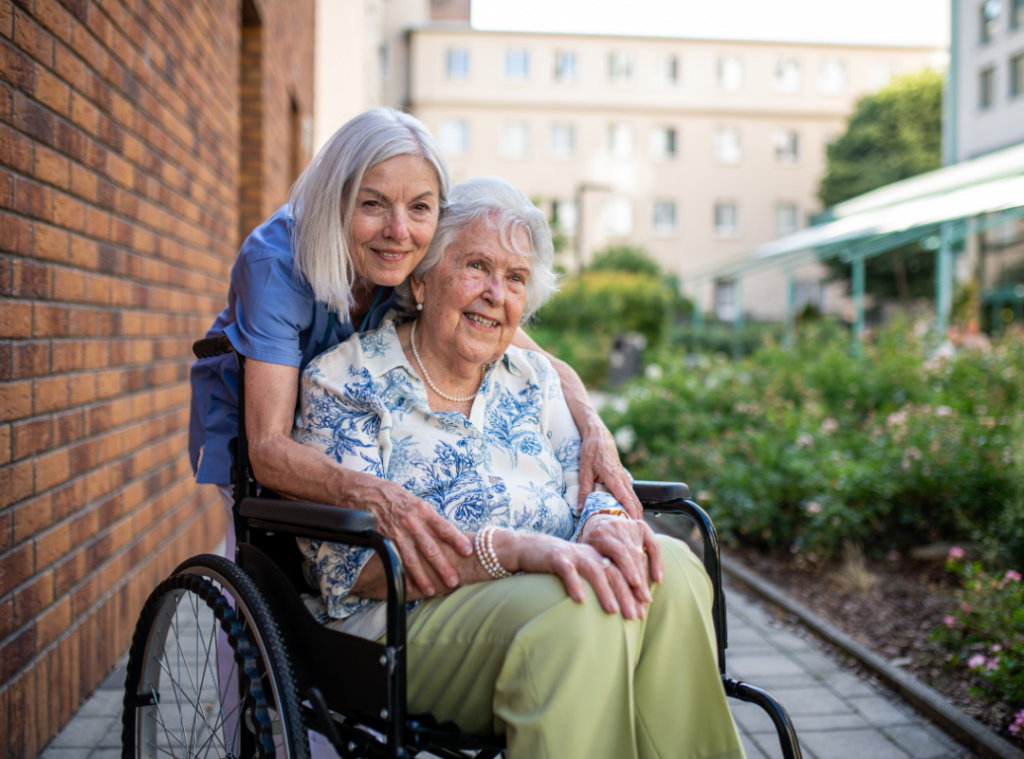
Senior socialization includes the everyday conversations, shared interests, routines, and relationships that help older adults stay connected to other people. It does not have to mean attending large events or filling every day with group activities. The most meaningful opportunities usually match the person’s interests, abilities, comfort level, and preferred way of spending time.
Practical ways to encourage connection include:
- Building conversation into daily routines
- Spending time in comfortable shared spaces
- Eating with others when that feels enjoyable
- Connecting through gardening, faith, or other interests
- Using technology to maintain family relationships
- Choosing a comfortable level of participation
- Keeping family contact part of the weekly routine
The National Institute on Aging recommends maintaining regular contact with family, friends, and neighbors through in-person visits, phone calls, messages, email, and other forms of communication. The right combination will be different for each person.

1. Make Social Connection Part of Everyday Routines
Social connection may feel more manageable when it grows from familiar routines rather than depending only on special events. A greeting in a shared hallway, a brief conversation before a meal, or time spent outdoors near other people can provide regular opportunities to interact.
These moments may be especially helpful for someone who does not enjoy structured group activities. Instead of asking whether an older adult is “social enough,” consider which settings make conversation feel natural and how often the person would realistically want to participate.
Consistency matters more than filling a calendar. A few comfortable, recurring connections may be more meaningful than attending activities that do not match the person’s interests.
2. Use Shared Spaces Without Forcing Group Participation
Well-planned shared spaces can make social interaction easier because people do not always need a formal reason to gather. Living rooms, dining areas, patios, and gardens may allow residents to talk, observe an activity, or simply spend time around others.
Social participation can take several forms. One person may enjoy joining a conversation, while another may prefer reading nearby or speaking with one neighbor at a time. A supportive environment should provide opportunities without making constant group involvement feel mandatory.
At Wildflower Springs in Wimberley, spacious living, social, and dining areas offer settings families can consider when evaluating daily life. The community’s Hill Country surroundings also provide an outdoor setting for residents who appreciate quieter spaces.
When visiting a community, notice whether shared areas offer:
- Comfortable and accessible seating
- Space for both groups and quieter interaction
- A noise level that suits the future resident
- Clear ways to participate or step away
- Surroundings the person would genuinely use
3. Let Shared Meals Create Natural Conversation Openings
Shared meals can create predictable opportunities for conversation without requiring a separate social event. Sitting near familiar people, discussing the menu, or exchanging a few words before and after eating may make connection part of an existing routine.
This approach may suit someone who feels uncomfortable entering a scheduled group activity but enjoys informal conversation. Preferences still matter. Some older adults appreciate a lively dining room, while others may prefer a quieter table or occasional meals with family.
Wildflower Springs provides three meals each day with a choice of menu and has shared dining areas. Families should ask how dining arrangements work and consider whether the setting fits the future resident’s preferences.
Useful questions include:
- Can residents express seating preferences?
- What is the general pace and atmosphere during meals?
- Are quieter dining options available?
- Can families occasionally share a meal with a resident?
A meal setting may provide an opportunity for connection, but it does not guarantee that every person will want to socialize in the same way.

4. Build Connection Around Interests and Purpose
Shared interests can make social interaction feel less pressured because people have something specific to focus on together. The activity creates a natural starting point for conversation and may allow different levels of participation.
Gardening and Outdoor Interests
Gardening can provide opportunities for social connection when it matches the person’s interests and abilities. Someone might help plant herbs, discuss flowers, water a raised bed, or simply spend time near others who enjoy being outdoors.
Wildflower Springs has a private garden deck with raised-bed gardening. Families can consider whether this setting reflects an older adult’s genuine interests rather than treating gardening as an activity everyone will automatically enjoy.
A shared task can be useful for people who prefer doing something alongside others instead of maintaining continuous conversation. Participation might range from active gardening to watching, offering suggestions, or enjoying the outdoor surroundings.
Faith and Familiar Weekly Routines
Faith-based gatherings may provide familiarity, reflection, and contact with people who share similar interests or traditions. Wildflower Springs offers weekly nondenominational church services, providing an option for residents who choose to attend.
These gatherings will not suit every person, and participation should remain a matter of preference. Families can ask what the service involves and whether it aligns with the older adult’s beliefs and comfort level.
5. Use Technology to Maintain Existing Relationships
Technology can help older adults stay connected with relatives and friends who live too far away for frequent visits. Phone calls, text messages, email, social media, and video calls can supplement in-person contact rather than replace it.
The National Institute on Aging advises scheduling regular contact and using communication methods that work for the individual. A planned weekly call may be easier to maintain than relying on family members to connect whenever everyone happens to be available.
Wildflower Springs provides free Wi-Fi service, which may support residents using compatible personal devices. Wi-Fi availability alone does not mean that every resident has a device or feels comfortable using one, so families should plan around the person’s needs.
Consider:
- Which device is easiest for the older adult to use
- Whether passwords and contacts are already saved
- Who can provide help when a device needs attention
- Which relatives will commit to a regular call schedule
- Whether phone, video, or written messages feel most comfortable
Simple and familiar technology is often more useful than adding several new apps at once.
6. Choose the Right Level of Social Participation
Successful socialization for older adults is personal. Some people gain energy from groups, while others prefer one-to-one conversations, familiar routines, or quiet activities completed near other people.
Personality is only one consideration. Hearing, mobility, energy, grief, cognitive changes, and unfamiliar surroundings may also influence how someone participates. These factors should not be used to label the person as uninterested or difficult.
Different preferences may include:
- Joining a group discussion
- Sitting with one or two familiar people
- Gardening or completing another task alongside others
- Attending a weekly faith gathering
- Spending time in a shared room without actively talking
- Keeping most connections centered on family and close friends
Families should look for choice and flexibility rather than judging a community only by the number of activities offered. The better question is whether the available opportunities fit the individual.
7. Keep Family Relationships Part of the Routine
Community life should complement existing relationships, not replace them. Regular family contact can provide familiarity and continuity while an older adult develops new routines.
Families might plan scheduled calls, visits, shared meals, outdoor time, or video conversations with relatives who live farther away. The frequency should reflect the older adult’s wishes and the family’s circumstances rather than an arbitrary rule.
It may help to establish a realistic pattern before a transition. For example, relatives could agree on one recurring call and one flexible contact each week. A simple plan is often easier to sustain than frequent promises that become difficult to keep.

What to Observe in a Community’s Social Environment
A list of amenities cannot show whether a community’s social environment is the right fit. A visit allows families to observe the spaces, ask how routines work, and consider whether the older adult would feel comfortable using what is available.
| Area or Routine | How It May Support Connection | What to Ask | What to Observe |
| Shared living areas | Provide places for informal conversation or quiet shared time | How are these spaces typically used? | Comfort, accessibility, noise, and seating choices |
| Dining spaces | Create recurring opportunities to see and speak with others | How do meals and seating work? | Atmosphere, pace, and suitability for the future resident |
| Gardens and outdoor areas | Offer a shared interest or low-pressure activity | How can residents use the outdoor space? | Accessibility, shade, seating, and personal interest |
| Faith or interest-based gatherings | Bring people together around a familiar purpose | What does participation involve? | Whether the option matches the person’s preferences |
| Wi-Fi and communication | Help residents maintain relationships outside the community | What technology must residents provide themselves? | Connectivity and the person’s ability to use a device |
| Group and quiet options | Allow different levels of participation | Can residents choose how and when to join? | Whether interaction appears optional rather than pressured |
Families should also pay attention to how clearly questions are answered. Specific explanations are more useful than broad assurances that residents are active or engaged.
For a wider evaluation of care, services, meals, communication, and costs, review these questions to ask during an assisted living visit. The guide recommends comparing what a community says with what families observe during a visit.
Explore Social Life at Wildflower Springs
Wildflower Springs offers Assisted Living and Memory Care in Wimberley, Texas. Its living, social, and dining areas, garden deck, Wi-Fi service, meals, and weekly nondenominational church services provide several features families can consider when evaluating opportunities for connection.
The most useful way to evaluate those features is to see them in person and consider how they fit the future resident’s interests and preferred level of participation. Families can schedule a tour of Wildflower Springs or contact Wildflower Springs to ask about the community’s spaces and daily routines.
Frequently Asked Questions
Which community spaces can support regular social interaction?
Living rooms, dining areas, gardens, patios, and other comfortable shared spaces can provide regular opportunities for interaction. The most useful spaces are accessible, inviting, and suitable for the older adult’s preferred noise and activity level. Some people may join a group, while others may prefer a quiet conversation or simply spending time near others. Families should observe whether the spaces offer both connection and personal choice.
How can shared meals encourage conversation among residents?
Shared meals can create predictable, low-pressure openings for conversation. Residents may see familiar people regularly, discuss the meal, or exchange a few words before and after eating. The experience depends on seating arrangements, the dining-room atmosphere, and individual preferences. Families should ask how meals work rather than assuming everyone socializes in the same way.
Can gardening provide opportunities for social connection?
Yes, gardening can provide opportunities for connection when it matches the person’s interests and abilities. A shared gardening space gives people a common subject and an activity they can complete together or side by side. Participation may include planting, watering, discussing plants, or simply enjoying the outdoor setting. Gardening should be treated as an available option rather than an activity every resident is expected to enjoy.
How can Wi-Fi help residents stay connected with family?
Wi-Fi can support email, text messaging, social media, voice calls, and video conversations on compatible personal devices. It may be especially useful when relatives live too far away for frequent visits. Families should choose a device and communication method the older adult can use comfortably. They should also decide who will help with passwords, updates, or technical problems when needed.
What should families observe when evaluating a community’s social environment?
Families should observe whether shared spaces feel comfortable, accessible, and suitable for the future resident. They should look for a choice between group participation, quieter interaction, and personal time. It is also helpful to ask how meals, gatherings, outdoor areas, and communication options work in daily life. The goal is not to count amenities but to determine whether the environment fits the individual’s interests and preferences.