

Choosing between home care and assisted living is not simply a choice between staying home and moving. A more useful question is whether each setting can reliably meet an older adult’s needs throughout a typical day.
Home care lets someone stay in familiar surroundings while receiving scheduled assistance. Assisted living combines housing with access to daily support, shared services, and supervision in a residential community. Neither option is automatically better.
For families comparing home care vs assisted living, the decision often becomes clearer when they look at six areas: how often help is needed, when it is needed, who provides it, which household tasks still need to be managed, how much social connection is available, and whether the arrangement can adapt if support needs increase.

What Is the Main Difference Between Home Care and Assisted Living?
Home care brings support into a person’s existing home. Depending on the arrangement, assistance may be scheduled for certain hours, particular tasks, or recurring visits. Family members may also continue handling responsibilities that fall outside those visits.
Assisted living changes both the support arrangement and the living environment. Residents live in a residential community where they may receive personal assistance and other daily services. Services vary by community, so families should confirm what a specific community provides rather than assume all assisted living settings operate the same way.
Federal guidance about assisted living and other residential care settings notes that assisted living may include personal care, meals, medication help, housekeeping, laundry, supervision, and social or recreational opportunities.
The practical distinction is therefore not simply home versus community. It also depends on how support is organized and how available it is when the person needs it.
Home Care vs Assisted Living at a Glance
| Decision Factor | Home Care | Assisted Living |
| Living setting | The person remains in their current home | The person moves into a residential community |
| Personal care | Can be arranged according to the care plan and caregiver schedule | May be available as part of the community’s support services |
| Supervision | Depends on scheduled coverage and who else is present | Support and supervision may be available throughout the day, depending on the community |
| Meals | The older adult, family, caregiver, or another service must manage meals | Meals are commonly part of assisted living services |
| Housekeeping and laundry | Must continue to be handled within the home | May be included as community services |
| Home responsibilities | Home upkeep, utilities, shopping, and other responsibilities remain | Many household responsibilities shift to the community |
| Social connection | Usually depends on existing relationships, transportation, visits, and outside activities | Shared spaces and community activities can make interaction easier to access |
| Family coordination | Family may need to arrange schedules, backup help, household tasks, and appointments | Some daily responsibilities may shift from family to the community |
| Changing needs | Additional hours or services may need to be arranged | Families should ask how the community responds when a resident needs additional support |
| Cost | Depends heavily on the amount and type of help needed | Depends on the community, accommodations, services, and care needs |
Cost matters, but consider it alongside the amount of daily support involved. Families who want to examine the financial side separately can use the Lavender Springs assisted living and staying-at-home cost comparison.
How Much Daily Help Does the Person Need?
Start by looking at an ordinary day rather than asking whether someone simply “needs help.”
One person may need assistance with bathing twice a week and transportation to appointments. Another may need help getting dressed in the morning, medication reminders, meal preparation, transfers, and evening support.
Those situations place very different demands on a home-based care plan.
Consider three questions:
- How often is help needed?
- When is help usually needed?
- What happens if that help is not available?
Predictable needs can sometimes be easier to organize around scheduled home care. Increasingly frequent or unpredictable needs may require more complicated scheduling, greater family involvement, or longer periods of caregiver coverage.
Scheduled Help vs Ongoing Availability
The difference between scheduled support and broader availability can matter even more.
Suppose an older adult receives home care for several hours each morning. That arrangement may work well if the person manages comfortably for the remainder of the day.
It becomes harder if important needs routinely arise in the afternoon, evening, or overnight when the scheduled caregiver isn’t there.
When comparing in-home care vs assisted living, families should therefore look beyond the number of tasks a person needs help with. The timing and predictability of those needs matter too.
How Do Independence and Supervision Differ?
Staying at home often feels like independence because the person stays in familiar surroundings and keeps established routines.
But independence is not determined by address alone.
A person may remain at home yet become increasingly dependent on relatives for meals, transportation, housekeeping, medication routines, or personal care. Another person may move to assisted living and continue making many everyday choices while receiving help with the tasks that have become difficult.
A better question is:
Which setting allows the person to do what they can independently while making dependable help available for what they cannot comfortably manage alone?
Evaluate supervision the same way.
If an older adult is comfortable and able to manage between scheduled visits, a home-based arrangement may continue to fit. If the family grows increasingly worried about long periods without support, missed routines, mobility difficulties, or other recurring gaps, the amount of unsupervised time becomes a key part of the decision.
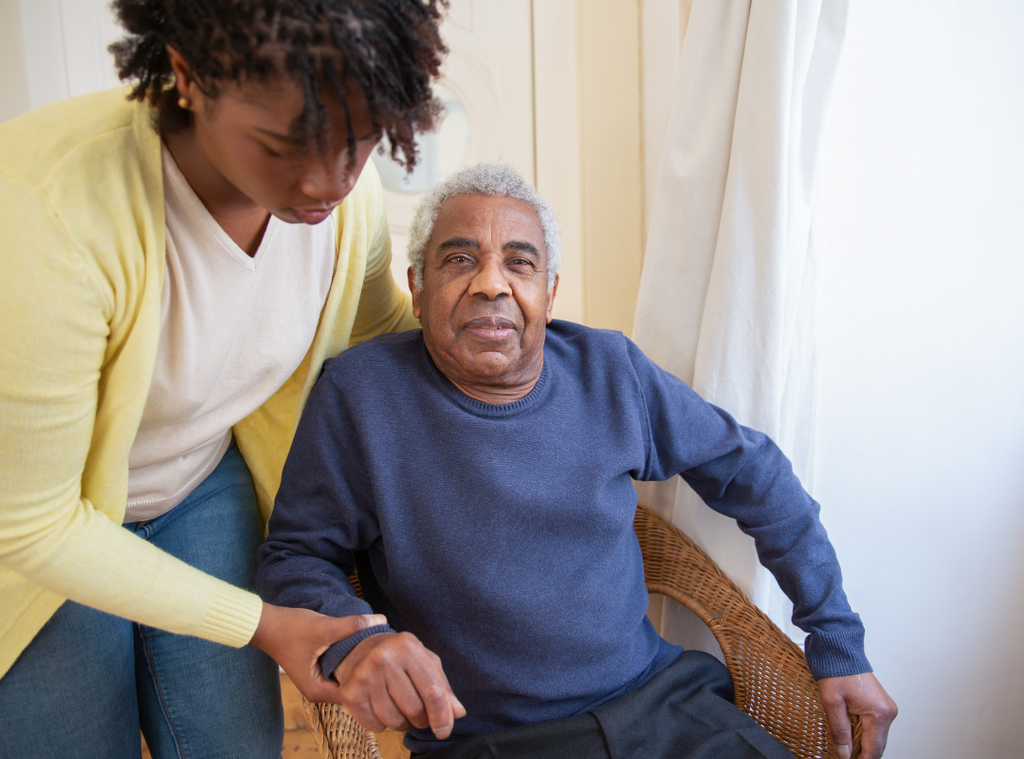
Who Handles Personal Care and Household Responsibilities?
Hands-on care is only one part of daily living.
Families may initially focus on tasks such as:
- Bathing
- Dressing
- Grooming and hygiene
- Transfers
- Medication routines
But living at home also means someone must keep the home running.
That can include:
- Preparing meals
- Grocery shopping
- Laundry
- Housekeeping
- Changing linens
- Scheduling appointments
- Transportation
- Home maintenance
- Managing deliveries or household supplies
An individual task may seem manageable. The combined workload can be different.
For example, an adult child may be comfortable helping with appointments and grocery shopping once a week. If that gradually expands into daily meal coordination, medication reminders, laundry, personal care, and unexpected evening visits, the overall support arrangement has changed substantially.
Families considering aging in place vs assisted living should add up the entire daily-life workload, not only the hours of hands-on personal care.
How Do Social Connection and Daily Routine Compare?
Daily support is also about what happens between care tasks.
Remaining at home can preserve familiar surroundings, neighbors, routines, and meaningful connections. For someone with an active social network and reliable transportation, that can be a major advantage.
For others, social contact can become harder to maintain when driving becomes difficult, friends live farther away, mobility changes, or most visitors are arriving mainly to provide care.
In assisted living, shared dining areas, common spaces, outdoor areas, and community activities may make interaction more accessible. That does not mean every resident wants the same amount of social activity. Some people prefer frequent group involvement, while others value quieter routines and private time.
The useful comparison is not “Which setting is more social?”
Ask instead:
- How often does the person currently interact with others?
- Are those interactions easy to maintain?
- Does the person want more or less social contact?
- Would transportation or mobility make preferred activities at home difficult?
- Would nearby shared spaces make participation easier?
- Can the person still have privacy and quiet time when they want it?
The goal is a daily environment that fits the individual’s preferences, not the busiest possible schedule.
How Much Can Family Caregivers Realistically Provide?
Family support can make aging at home possible for a long time. It can also become increasingly complicated as needs change.
When comparing care settings, families should discuss what relatives can consistently provide, not what they could theoretically do during an emergency.
Consider:
- Work schedules
- Childcare or other family responsibilities
- Driving distance
- Morning and evening availability
- Overnight coverage
- Vacations and illness
- Backup caregivers
- Transportation needs
- Who coordinates appointments and services
- Whether one person is carrying most of the responsibility
A home plan that depends on several people changing schedules at short notice may seem reliable at first, but it may not be.
This is not a judgment about how committed family members are. It is a practical question about whether the arrangement remains workable week after week.
When Can Staying at Home Become Harder to Sustain?
No single event automatically means someone should move to assisted living.
It is usually more useful to watch for patterns.
Staying at home may become harder to sustain when:
- Help is needed more frequently than before
- Important needs regularly occur outside scheduled caregiver hours
- Meals, laundry, housekeeping, or personal care are repeatedly being missed
- Family members are struggling to cover gaps
- Household responsibilities are becoming difficult to coordinate
- Transportation limits participation in important activities
- Social interaction has become harder to maintain
- Support needs are changing faster than the current care arrangement can adapt
The key is repetition.
One difficult week after an illness does not necessarily mean the long-term plan must change. A continuing pattern of increasing support needs deserves a closer look.
Families still identifying where assistance is needed may also find the Lavender Springs article on assisted living eligibility useful for understanding how recurring daily support needs can affect care planning.

How Can Families Decide Between Aging in Place and Assisted Living?
A useful decision starts with the person’s normal routine.
Walk through an average day from waking up to bedtime and ask:
- What can the person manage independently?
Separate tasks that are comfortable and reliable from those that now require reminders, setup, or hands-on help. - What help is needed every day or most days?
Include personal care, medications, meals, mobility, transportation, laundry, housekeeping, and other recurring needs. - When is that help needed?
Morning-only support differs from assistance needed throughout the day. - Who provides the help now?
List paid caregivers, relatives, friends, neighbors, and outside services. - What happens when the usual caregiver is unavailable?
A sustainable plan needs backup coverage. - Who manages the household?
Include meals, cleaning, laundry, shopping, transportation, maintenance, appointments, and supplies. - Is the person’s preferred social routine still practical?
Consider transportation, mobility, access to friends and family, activities, and the person’s own preferences. - Are needs becoming more frequent or unpredictable?
Look for patterns over time rather than one isolated difficulty. - Would the current plan still work if one or two needs increased?
A plan that works only while everything remains unchanged may require more flexibility. - Which setting provides the most sustainable combination of independence and support?
The goal is not to maximize assistance. It is to provide enough reliable help while preserving meaningful choice and independence.
Families who want another way to organize these considerations can explore the Lavender Springs Lifestyle Assessment.
What About the Cost of Home Care vs Assisted Living?
Cost matters, but comparing an hourly home-care rate with an assisted living monthly rate doesn’t tell the whole story.
A useful comparison should account for:
- How many hours of home support are required
- Which household expenses continue at home
- Which meals or household services are being arranged separately
- Which services are included in an assisted living arrangement
- Whether support needs are expected to change
Because the financial question can quickly become complex, this article intentionally focuses on the care-setting decision.
For a deeper financial comparison, use the Lavender Springs Cost Comparison tool to compare assisted living with staying at home.
How Lavender Springs Supports Daily Living
For families in the Austin area who decide assisted living may better fit their needs, compare the person’s daily routine with the services a community provides.
Lavender Springs offers 24-hour personal care and supervision, medication assistance, and help with bathing, dressing, grooming, hygiene, and transfers. Daily services also include three meals, personal laundry, and housekeeping.
Residents have private bathrooms and showers, along with access to spacious living, social, and dining areas. The community also includes outdoor living areas, a garden deck with raised beds, a beauty salon, Wi-Fi, and weekly on-site nondenominational church services.
Families can review Lavender Springs’ senior living services and care options to learn more about available support.
The next step isn’t simply confirming that a service appears on a list. Ask how the available support would fit the person’s routines, preferences, and needs.
Choose the Support Setting That Fits Daily Life
The home care vs assisted living decision becomes easier to evaluate when families move beyond where someone would prefer to live and look at what an ordinary day actually requires.
Consider how often and when personal care, supervision, meals, household responsibilities, social connection, and family availability are needed, and how likely those needs are to change.
If assisted living seems to match the level of support your family is exploring, you can schedule a tour of Lavender Springs to see the community and ask how its services could fit your family member’s daily routine.
Frequently Asked Questions
Is home care or assisted living better for someone who needs daily help?
Neither option is automatically better. Home care may work well when the person’s needs are predictable, sufficient caregiver coverage is available, and the home remains manageable. Assisted living may be worth considering when someone needs regular personal assistance, supervision, meals, household services, and broader support.
The best option reliably meets the person’s needs while supporting as much appropriate independence as possible.
When can staying at home become harder than moving to assisted living?
Staying at home can become harder when support needs increase, gaps between caregiver visits grow, family coverage becomes difficult to maintain, household responsibilities pile up, or the current arrangement cannot adapt as needs change.
Look for patterns, not isolated problems.
What is the difference between daily support at home and in assisted living?
With home care, support comes to the person’s current residence based on the arranged services and schedule. The individual or family may still handle other daily and household responsibilities.
Assisted living combines housing with personal assistance and access to community services. Support varies by community, so families should ask specifically what is available and when.
How should families compare supervision, social support, and personal care?
Compare each area according to the person’s actual routine.
For supervision, consider when someone is available and what happens between scheduled help periods. For social support, look at the person’s existing relationships, transportation, preferred activities, and access to interaction. For personal care, list which tasks require help, how often help is needed, and whether that support is available when needed.
The strongest choice is the setting where those pieces work together sustainably.