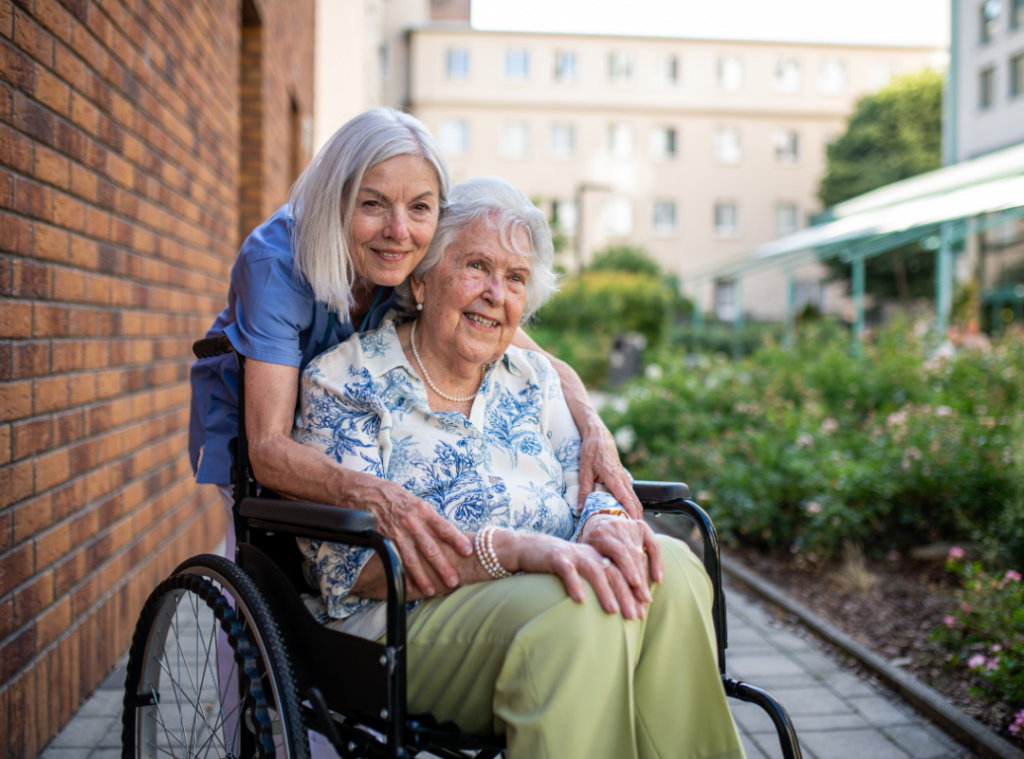
The best indoor activities for seniors are familiar, flexible, and easy to enjoy with someone else. A card game, favorite song, photo album, or simple craft can give people something to focus on together, making conversation feel more natural.
Personal interest matters more than the size or complexity of the activity. The National Institute on Aging’s guidance on staying connected recommends choosing enjoyable activities, returning to old hobbies, and finding meaningful ways to stay connected with others.
The ideas below include activities for one person, two people, and small groups. Each can be adjusted to suit the participant’s interests, comfort, abilities, and energy that day.

Indoor Activities for Seniors That Make Time Together More Meaningful
1. Use Conversation Cards and Story Prompts
Open-ended questions can feel like an interview, especially when someone is unsure what to talk about. A photograph, postcard, familiar object, or written prompt gives the conversation a clear starting point.
Try prompts such as:
- What meal did your family make for special occasions?
- Which place have you most enjoyed visiting?
- What song always makes you think of a particular time?
- Which household item has changed the most during your lifetime?
Comment on the item first, then ask a question. Saying, “That car looks very different from the ones we see today,” may feel more natural than asking someone to recall a specific date or detail.
Best for: One-to-one visits or small groups
Supplies: Photographs, postcards, meaningful objects, or printed prompts
2. Sort Photos or Create a Shared Album
A box of unsorted photographs can become a project that continues over several visits. Photos might be grouped by person, location, celebration, or decade, then placed in an album with simple labels.
The goal does not need to be perfect identification or chronological order. Participants can notice clothing, scenery, expressions, or familiar objects without being tested on names and dates.
Best for: Individual preparation, one-to-one visits, or small-group conversation
Supplies: Photo-safe album, removable notes, labels, and a large-tip pen
3. Play Cards, Dominoes, or Familiar Table Games
Familiar games give people a shared structure, which can be helpful when conversation alone feels difficult. Choose games with manageable rules and a session length that can be shortened easily.
Large-print playing cards and easy-to-handle pieces can make participation more comfortable. Competitive play is not essential; partners can work together or keep the mood light without recording scores.
Best for: Two people or a small group
Supplies: Large-print cards, dominoes, dice, or a score pad
4. Work on a Cooperative Puzzle
A puzzle creates a common goal and allows conversation to come and go without pressure. Jigsaw puzzles, word searches completed together, picture-matching games, and simple logic puzzles can all work.
Select a difficulty level that feels engaging rather than frustrating. A puzzle tray or board makes it easier to pause the activity and continue another day.
Best for: Individual use, one-to-one visits, or small groups
Supplies: Puzzle, puzzle board, good lighting, and a storage bag or box
5. Make Something to Display or Share
Creative activities can lead to conversation while also producing something tangible. Options include:
- Greeting cards
- Seasonal decorations
- Collages
- Watercolor painting
- Coloring
- Knitting or crocheting
- Scrapbook pages
Choose familiar materials and keep the number of steps manageable. A project does not have to look polished to be meaningful. It might be displayed in a room, mailed to a relative, or used during a family celebration.
Best for: Individual participation or a shared table activity
Supplies: Paper, markers, yarn, magazines, glue sticks, or washable paint
6. Listen to Music and Build a Shared Playlist
Music provides an immediate subject for conversation. Family members can compare favorite performers, choose songs from a particular decade, listen to movie soundtracks, or build a playlist together.
Questions can remain specific and low-pressure:
- Do you like the singer’s voice?
- Does this sound like music for dancing?
- Which instrument stands out?
- Should this song stay on the playlist?
At Wildflower Springs, free Wi-Fi can support music listening and other online activities when families bring an appropriate device.
Best for: One person, two people, or a group
Supplies: Phone or tablet, headphones when appropriate, and a small speaker if permitted
7. Read Aloud or Listen to an Audiobook
Reading together gives everyone the same material to consider. A short story, poem, magazine feature, devotional reading, or audiobook chapter may be easier to complete than a full book.
Pause when something invites a response, but avoid turning the activity into a quiz. A simple comment such as, “That character made a surprising choice,” may open a better discussion than a series of comprehension questions.
Best for: One-to-one visits or small groups
Supplies: Large-print reading material, tablet, audiobook, or printed discussion prompts
8. Try a Simple Plant Project
Indoor gardening activities may include decorating a planter, planting herbs, arranging flowers, labeling plants, or choosing what to grow next.
Plant projects create something participants can return to later. They may also be a good fit for an older adult who has enjoyed gardening, cooking with herbs, or arranging flowers.
Wildflower Springs has a private garden deck with raised-bed gardening, making garden-related conversations and projects especially relevant to the community’s Hill Country setting.
Best for: Individual or shared participation
Supplies: Small container, plant labels, potting soil, easy-care plant, and a tray for cleanup
9. Collect and Organize Family Recipes
A shared food activity does not have to involve a full cooking project. Families can write recipe cards, organize recipes into a booklet, discuss favorite meals, or choose dishes for an upcoming gathering.
A recipe can encourage stories about celebrations, family routines, regional foods, and the people who prepared them. When food is served or prepared, families should first confirm that it fits the older adult’s dietary and swallowing needs.
Best for: One-to-one visits or small groups
Supplies: Recipe cards, binder, photographs, magazines, or family recipes
10. Explore a Place Online
Virtual tours can turn a phone, tablet, or computer into a shared discovery tool. Participants might explore:
- A museum
- A national park
- A hometown
- A favorite travel destination
- A famous building
- A concert or stage performance
- A neighborhood where a family member now lives
Let the older adult help choose the destination. The activity becomes more social when everyone observes, reacts, and asks questions rather than one person controlling the screen.
Best for: One-to-one visits or small groups
Supplies: Internet-connected device and Wi-Fi
11. Add Gentle Seated Movement
Low-impact activities for seniors can be social without becoming formal exercise. Comfortable options may include seated movements to music, passing a lightweight ball, rhythm activities, or gentle stretches already familiar to the participant.
Movement should match the person’s current abilities and guidance from their healthcare professional or care team. The National Institute on Aging’s physical activity guidance also encourages older adults to consider their health, abilities, and safety when choosing activities.
Best for: One-to-one participation or small groups
Supplies: Supportive chair, music, or a lightweight ball
12. Complete a Project for Someone Else
Some unique activities for seniors become more engaging when there is a clear recipient or purpose. Participants might:
- Write birthday cards
- Assemble a small care package
- Create seasonal decorations for family
- Organize a family birthday calendar
- Make bookmarks
- Choose photos for a relative’s album
A shared purpose can make it easier to divide the activity into small roles. One person might choose colors, another may write, and someone else can organize the materials.
Best for: Individual participation, two people, or a small group
Supplies: Materials suited to the chosen project

How to Choose an Activity Based on Personal Interests
The right activity is not always the newest or most elaborate choice. It is usually something connected to an existing interest and adjusted to how the person feels that day.
Use these five questions to narrow the options:
- What has the person enjoyed before?
Begin with familiar interests such as music, gardening, reading, games, cooking, travel, crafts, or family history. - Do they prefer talking, making, moving, or quietly concentrating?
A person who enjoys working with their hands may prefer crafts or puzzles. Someone who likes storytelling may enjoy photographs or music. - Would they rather participate alone, with one person, or in a group?
Social does not always mean a large gathering. Many activities to do with seniors work best during a relaxed one-to-one visit. - What amount of time feels comfortable?
Choose something that can end after 10 minutes or continue longer without feeling unfinished. - What adjustments would make participation easier?
Consider lighting, print size, sound level, seating, grip, number of steps, and the amount of background activity.
Offer two choices rather than presenting a long list. “Would you rather listen to music or look through these photos?” is easier to answer than “What do you want to do?”
For someone living with memory changes, familiar activities may be more comfortable than entirely new ones. Keep instructions simple, demonstrate the first step when useful, and focus on participation rather than correcting mistakes.
Making Activities Work in a Shared Living Area
Good activities for shared living areas are portable, easy to pause, and considerate of others nearby.
A few practical adjustments can help:
- Keep music, videos, and conversation at a comfortable volume.
- Avoid placing bags, cords, or supplies in walkways.
- Use a table where everyone can see and reach the materials.
- Choose activities that allow someone to join or leave without disrupting the group.
- Store supplies in a tray, folder, or small container.
- Bring only what the activity requires.
- Check before using food, soil, paint, adhesives, or electronic speakers.
Games, puzzles, crafts, photographs, books, and tablets generally require little setup. They also give families flexibility when a planned activity does not suit the person’s mood or energy.
Supplies Families Can Bring for a Shared Activity
| Activity type | Useful supplies | Practical consideration |
| Conversation | Photos, postcards, prompt cards | Choose familiar, respectful subjects |
| Games | Large-print cards, dominoes, score pad | Use simple or familiar rules |
| Crafts | Paper, markers, yarn, reusable tray | Limit clutter and complicated tools |
| Reading or music | Large-print book, tablet, headphones | Confirm volume and device access |
| Puzzles | Puzzle board, large pieces, storage bag | Select a manageable difficulty |
| Plant project | Small pot, labels, easy-care plant | Keep soil and water contained |
Avoid bringing sharp tools, hot appliances, strong chemicals, or complicated equipment unless the setting and level of supervision have been confirmed.

Small Adjustments That Encourage Conversation
An activity can make regular conversation easier when it provides a shared subject. The focus moves away from finding the “right” thing to say and toward something both people can notice or do.
Try these approaches:
Comment before asking.
“This photograph has such bright colors” sounds more conversational than immediately asking who, when, or where.
Ask about preferences, not only memories.
Questions such as “Which one do you like?” or “What should we choose next?” allow the person to participate without recalling a specific fact.
Avoid testing questions.
Repeatedly asking someone to name people, dates, songs, or places may create pressure. Supply information naturally when it is known.
Allow quiet pauses.
Not every shared moment needs continuous conversation. Working on a puzzle, listening to a song, or sorting photographs together can still feel connected.
Return to an enjoyable activity.
A recurring project can give future visits a natural starting point. Continue the album, finish the puzzle, add to the playlist, or check on the plant.
Stop while the experience is still comfortable.
An activity does not need to be completed in one sitting. Ending before someone becomes tired or frustrated can make it easier to return to later.
Find Everyday Opportunities for Connection at Wildflower Springs
The most effective indoor activities for seniors do not require a complicated plan. Start with one familiar interest, bring a few simple supplies, and let the person’s response guide the pace.
Wildflower Springs in Wimberley offers assisted living and memory care in a beautiful Hill Country setting. Spacious living, social, and dining areas provide places where residents and visiting family members can spend time together. Families can also explore assisted living at Wildflower Springs or learn about memory care at Wildflower Springs as support needs change.
Families preparing to explore senior living may also find it helpful to review these questions to ask assisted living communities during a visit.
To see the community’s shared spaces and discuss everyday life in person, schedule a visit to Wildflower Springs.
Frequently Asked Questions
What indoor activities work well in shared living areas?
Portable, low-clutter activities usually work best in shared living areas. Cards, dominoes, puzzles, photographs, crafts, reading, music at a considerate volume, and virtual tours can be enjoyed without taking over the room. Choose something that is easy to pause and allows another person to join or leave comfortably. Keep supplies contained and walkways clear.
How can families choose activities based on personal interests?
Start with hobbies, music, games, places, or routines the older adult already enjoys. Consider whether the person prefers conversation, quiet concentration, creativity, or gentle movement. Offer two manageable choices and adjust the activity to the person’s comfort and abilities that day. Familiarity is often more useful than novelty.
Which activities can be enjoyed individually or with a small group?
Puzzles, reading, crafts, music, photo albums, card games, plant projects, and virtual tours can all be adapted for individual or small-group participation. Someone might begin a project independently and share it later, or family members can work alongside one another. Choose an activity with flexible roles so everyone can participate at a comfortable level.
How can indoor activities encourage regular conversation?
Indoor activities provide a shared subject, making conversation feel less forced. Photos, music, games, recipes, and creative projects can lead to specific comments and questions. Recurring activities also give people something familiar to continue during future visits. Conversation should remain optional; quiet shared participation can be meaningful too.
What supplies should families consider bringing for a shared activity?
Bring simple, portable supplies that match one planned activity. Useful options include large-print cards, photographs, a puzzle, a large-print book, a tablet, headphones, craft materials, or a small plant project. A tray or storage bag can keep materials organized. Confirm any restrictions before bringing food, soil, speakers, sharp tools, or equipment.