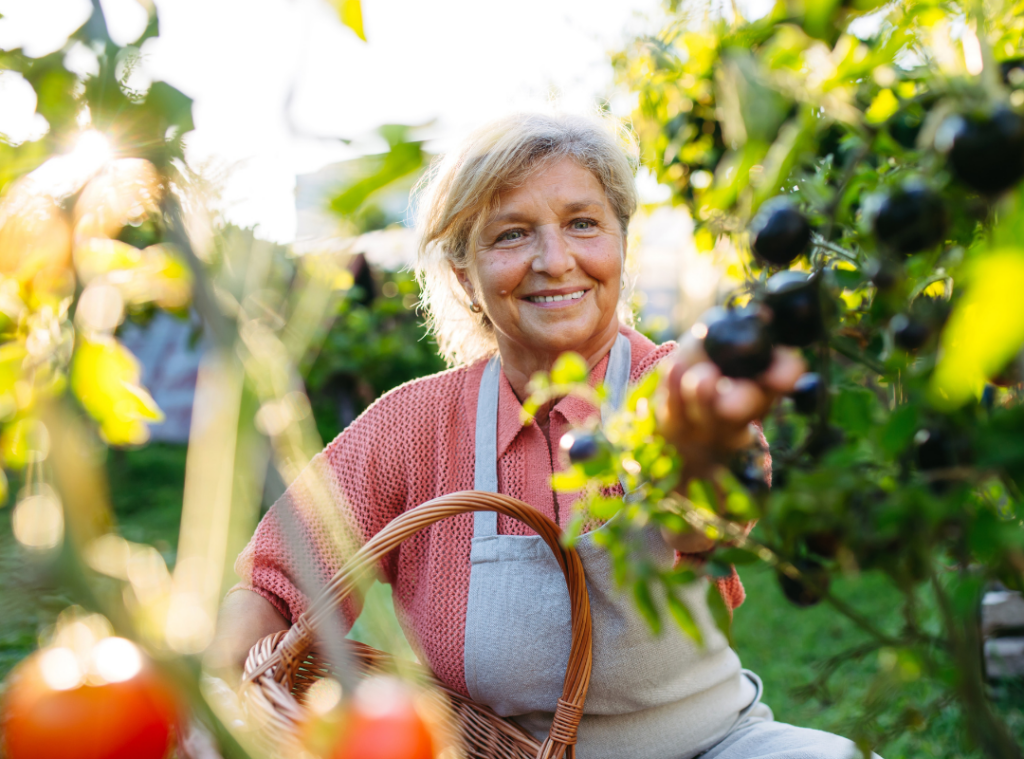
Gardening can remain an enjoyable part of life when the space, tools, tasks, and schedule fit the gardener’s current abilities. The goal is not to complete every job in one afternoon. It is to create a comfortable way to plant, tend, and enjoy a garden without unnecessary strain.
An older gardener may need easier access to plants, lighter tasks, more opportunities to rest, or help with strenuous work. A few thoughtful changes can make a familiar hobby easier to continue.
Key takeaway: Safer senior gardening usually begins by bringing the work closer, reducing the effort required, and making rest and help easy to access.

Start With the Gardener, Not the Garden
Age alone does not determine what someone can or cannot do. Before changing a garden, consider the individual gardener’s reach, balance, grip, stamina, vision, mobility, and comfort.
A simple assessment can help:
- Which gardening tasks still feel comfortable?
- Which movements cause pain, fatigue, or unsteadiness?
- Can plants and supplies be reached without stretching?
- Is there a safe place to sit and rest?
- Which jobs would be better handled by someone else?
The answers may change from day to day. A person who enjoys planting flowers may feel comfortable working with small containers but needs help moving soil or carrying a watering can.
Anyone returning to gardening after an illness, injury, surgery, or major change in mobility should follow guidance from an appropriate health professional.
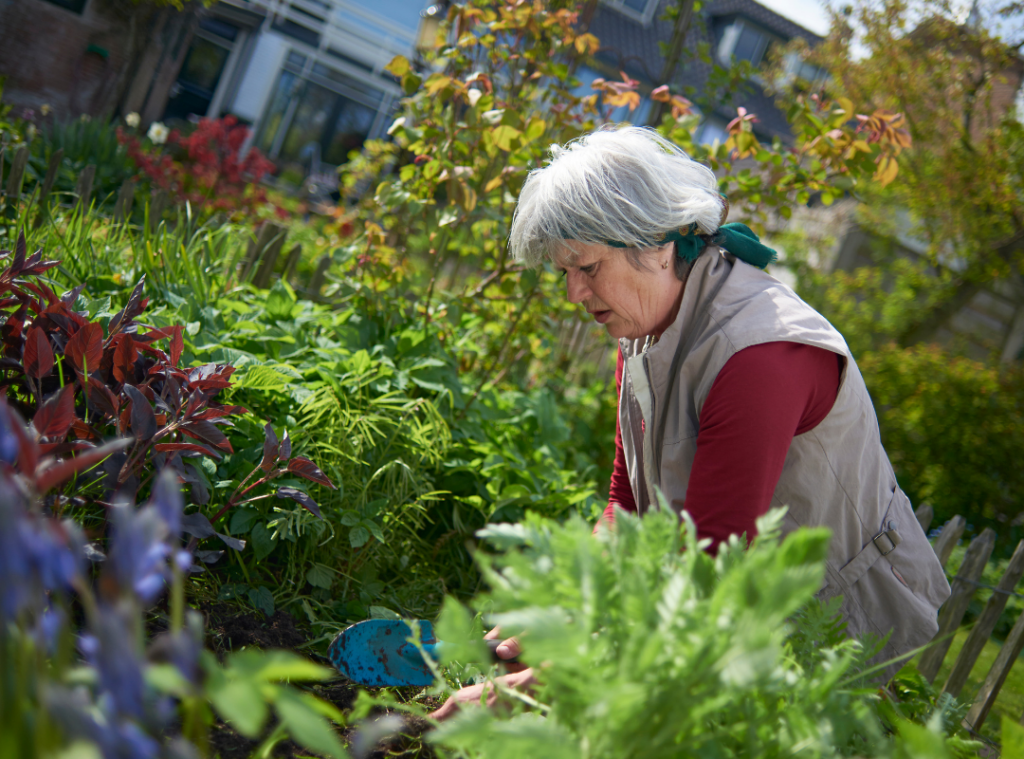
Bring the Garden Within Easier Reach
Raised beds can be easier for older adults because they bring the soil and plants closer to a comfortable working height. This may reduce the need for deep bending, kneeling, or reaching toward the ground.
Height is not the only consideration. A raised bed should also be narrow enough for the gardener to reach the plants without leaning too far. The University of Minnesota Extension’s raised-bed gardening guidance recommends using comfortable arm reach to help determine a suitable bed width. Access from more than one side can also make the center easier to reach.
Other ways to make a garden easier to access include:
- Using pots or containers for a smaller planting area
- Placing favorite plants near the easiest entrance
- Keeping frequently used supplies close to the garden
- Using stable, uncluttered walking surfaces
- Leaving enough room to approach the garden comfortably
- Choosing a hose or watering setup that requires less carrying
The best design depends on the person. A tall bed may help one gardener stand upright, while another person may prefer a lower bed that can be reached while seated.
Divide Gardening Into Shorter Sessions
Many gardening tasks do not need to be finished at once. Dividing them into smaller sessions can help someone stop before discomfort or fatigue takes over.
Tasks that can often be completed a little at a time include:
- Watering a small group of plants
- Checking soil moisture
- Planting a few seeds or seedlings
- Deadheading several flowers
- Harvesting one section of the garden
- Doing light pruning
- Sorting seeds and plant labels
- Cleaning and returning hand tools
For example, an older adult might plant three containers in the morning instead of trying to complete the whole patio. A family member could move the soil and containers, while the gardener chooses the plants and handles the planting.
More strenuous jobs may be better delegated. These can include carrying large bags of soil, digging a new bed, moving heavy pots, pulling deeply rooted plants, or pushing a loaded wheelbarrow.
Shorter sessions also make it easier to adjust to changing weather, energy, and comfort.
Create a Comfortable Place to Work and Rest
A convenient setup can make as much difference as the gardening task itself. Before beginning, prepare the area so the gardener does not need to make repeated trips or search for supplies.
Consider providing:
- A sturdy chair or bench nearby
- Shade or an umbrella where practical
- Drinking water within easy reach
- A basket or container for small tools
- Gloves, sunscreen, and a hat
- A clear place to set harvested vegetables or flowers
- A storage area that does not require deep bending
Check the ground for hoses, tools, loose materials, or uneven spots that could become obstacles. Supplies should be close enough to reach but not placed in walking paths.
Weather matters, especially during hot Texas months. The National Institute on Aging’s hot-weather safety guidance for older adults advises older adults to drink liquids, limit outdoor exercise when it is too hot, and move indoors when necessary. Some medical conditions and medicines can also affect how the body responds to heat.
Morning or evening may be more comfortable than the hottest part of the day. On very hot days, indoor plant care may be the better choice.
Choose Tools for Comfort and Control
Gardening tools for seniors should fit the gardener and the job. A product labeled “ergonomic” or “senior-friendly” is not automatically comfortable for everyone.
Consider these factors when choosing a tool:
- Weight: Can it be lifted and controlled without strain?
- Grip: Is the handle comfortable to hold without squeezing tightly?
- Handle length: Does it reduce bending without making the tool difficult to control?
- Wrist position: Can the task be completed without awkward twisting?
- Visibility: Is the tool easy to see against soil, plants, or grass?
- Purpose: Is it suited to the specific task?
- Storage: Can it be reached and put away easily?
When possible, let the gardener hold and move a tool before buying it. A lightweight tool may still feel unbalanced, while a long-handled tool may be helpful for one task but awkward for another.
Keep the selection simple. A few comfortable, useful tools are often better than a large collection that is difficult to organize.
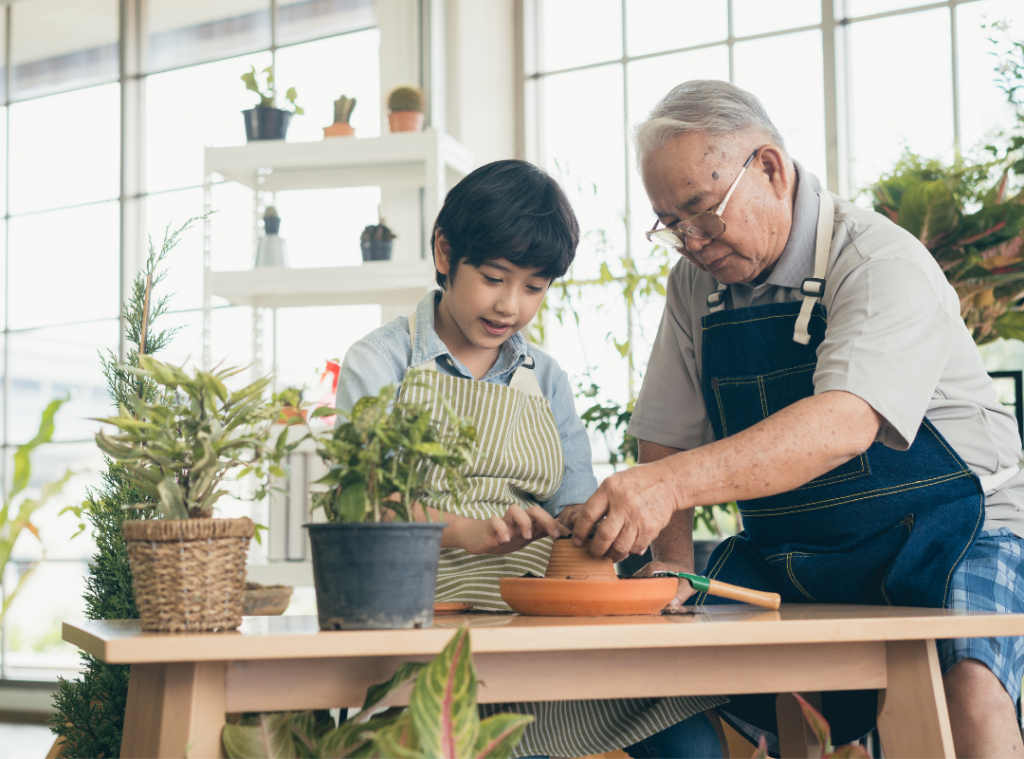
Help Without Taking Over
Family support can make elderly gardening safer and easier, but help should not remove the older adult’s choices. Ask what the person wants to do and which tasks they would like someone else to handle.
Families can help by:
- Preparing the work area
- Carrying soil, water, or large containers
- Setting out tools and a chair
- Checking the weather
- Handling difficult digging or lifting
- Working beside the older adult
- Cleaning the area afterward
- Returning tools to an easy-to-reach place
Try not to assume that every task needs to be completed for the gardener. Choosing plants, arranging containers, watering seedlings, or picking flowers may be meaningful parts of the experience.
Support works best when it protects comfort while preserving participation.
Make Gardening Part of a Social Routine
Gardening can become easier to continue when it is connected to a regular social routine. The activity does not need to be formal or time-consuming.
Ideas include:
- Watering plants during a weekly family visit
- Checking the garden before morning coffee
- Inviting a friend to plant containers together
- Giving each person a different task
- Sharing flowers, herbs, or vegetables
- Taking progress photos to send to relatives
- Caring for indoor plants when outdoor conditions are unsuitable
A routine should remain flexible. The gardener may want to participate for only a few minutes or skip a day entirely.
The shared experience matters more than the amount of work completed. One person can prepare the containers while another plants. Someone else can label the plants or bring water. These complementary roles allow people with different abilities to participate together.
Enjoy Accessible Gardening at Wildflower Springs
Wildflower Springs in Wimberley, Texas offers assisted living and memory care in a hill country setting. The community includes a private garden deck with raised-bed gardening, giving residents an opportunity to enjoy plants in a more accessible setting.
Families who value outdoor spaces can schedule a tour of Wildflower Springs and explore the community in person. Before visiting, review these questions to ask during an assisted living community visit to help you evaluate the setting, services, and daily experience that would matter most to your family.